It is hard to speak two languages at home. Ask a native speaker who lives in a country where a different language is spoken. Unless they have many relatives or a community where they speak their second language, they've probably given up teaching their children their native language.
Choosing to speak two languages at home isn't a one-time choice. It is a daily, hourly, even minutely choice, and for the last few weeks, I've been making the choice to give into exhaustion, excuses, and ease instead of switching into German.
Then, once I've not spoken German for a few weeks, it feels silly to speak it. Why speak it now if I won't be speaking it in ten minutes? How can I tell my children not to fight in German if I am worried they won't understand? Won't it look silly if I say a few things in German and then give up?
Ah, the ease with which I make up excuses!
I got out a book of fairy tales last night to read to myself. No input quickly leads to no output, so I worked on the input last night. It is high time to read a wikipedia article on winter and storms so that I can talk about things that are on our mind to my children (what did people do before wikipedia???).
It is time to just do it again. Steering is easiest while moving.
Showing posts with label german. Show all posts
Showing posts with label german. Show all posts
Monday, January 21, 2013

Friday, October 14, 2011
German as a foreign/second language
We're doing it! We're doing J's German School homework!
He can be in the advanced or beginner class. The advanced class includes children who spend the summer in Germany. The beginner class includes children who have never been exposed to German as a spoken language. He doesn't really fit into either group, as he understands way too much German to be a beginner and doesn't speak well enough to be advanced. We made a deal with the advanced teacher that J would try out her class for a month and then we'd reevaluate.
With that in mind, we really have to prepare for class. He can't just do spontaneous oral drills, we have to practice beforehand. We have to go over everything covered last class and preview everything he'll be doing the next class.
This discipline has been great. After looking for some sort of German curriculum to provide extra practice for the kids for a few years, we finally have one, preplanned and prepared for us. We have the discipline of class time and homework, and J has the reading skills necessary to do well with German in a spoken and written way.
We're still doing our own things to achieve my goal for German this year: that the children can understand stranger-produced German. We're reading books and listening to CD stories and music. We speak German in the afternoons after we've finished our other homeschool tasks for the day. This is the heart and lifeblood of our German learning. The German School and homework has just added the bones to keep things in place.
Monday, December 20, 2010
German game ideas
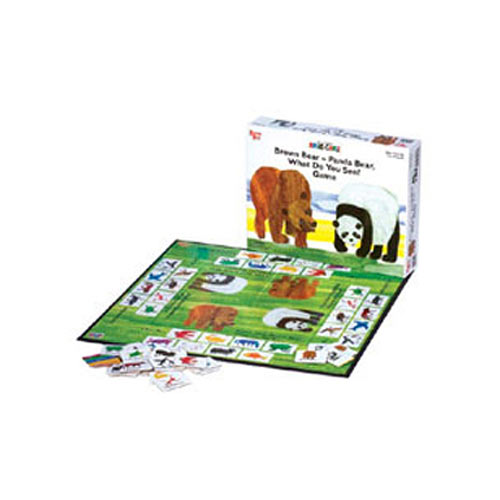
A local mom told me about her approach to Spanish with her children. Every few weeks she chooses a game (Chutes and Ladders, checkers, Hungry Caterpillar Game, or such) and teaches her children the vocabulary which go with the game. She taught them to count for Chutes and Ladders (Mancala would be good for this, too - Chutes and Ladders makes me nuts!) or taught food words for Hungry Caterpillar foods. Then, they play the game for a few weeks.
We have a game library here, but someone without one could trade games with friends and neighbors. This localizes the use of the language well to help prevent language mixing ("We've opened up a game, now we speak Japanese!") while linking the language to positive attention from the parents. This might also encourage the children to use the language because they are less likely to be forced into situations their vocabulary can't handle. We'll definitely do this tomorrow! Stayed tuned for how it goes!
*UPDATE*
 A and I had a good time playing the Brown Bear game. She volunteered all the colors but had to be coaxed through the animals (which was a surprise to me) and the fairly simple sentence structure. I think if we do it a few times she'll be pretty comfortable with it. I guess that post will come next week.
We have a game library here, but someone without one could trade games with friends and neighbors. This localizes the use of the language well to help prevent language mixing ("We've opened up a game, now we speak Japanese!") while linking the language to positive attention from the parents. This might also encourage the children to use the language because they are less likely to be forced into situations their vocabulary can't handle. We'll definitely do this tomorrow! Stayed tuned for how it goes!
*UPDATE*
Saturday, December 11, 2010
Songs and rhymes - are they connecting?
We've been singing songs in Molly's toddler German school class since September and she usually responds by sucking her thumb and possibly hiding her face. It hasn't been very encouraging until this Wednesday when we were supposed to be quiet during John's circle time. Then, out of the blue, Molly started singing, "Hoppe hoppe Reiter!"
Later that day, she started singing the toddler class Christmas song, "Kling, Glocke, klingelingeling."
And this morning, as I began singing, "Ich bin da, du bist da, wir sind alle da" to wake up the big kids, she lit up and said, "Ist Molly da?" (or at least the toddler version).
She's been soaking it up like a sponge - and finally I'm seeing the sponge being wrung out.
Subscribe to:
Posts (Atom)